When it comes to sound recording, polar patterns are the unsung heroes of audio capture. Imagine a microphone as a superhero with a unique ability to focus on sound from certain directions while ignoring the rest. This is where polar patterns come into play, shaping how recordings sound and ensuring that unwanted noise doesn’t crash the party.
From the omnidirectional charm of a mic that loves all sounds equally to the focused unidirectional hero that only listens to what’s in front, understanding these patterns can elevate any audio project. Whether you’re a budding podcaster or a seasoned sound engineer, knowing how to wield these patterns can turn your recordings from drab to fab. So, let’s dive into the world of polar patterns and discover how they can help you capture the perfect sound without any unwanted background noise trying to steal the spotlight.
What Are Polar Patterns?
Polar patterns define how microphones respond to sound from different directions. Understanding these acoustics helps in selecting the appropriate microphone type for any audio project.
Definition of Polar Patterns
Polar patterns illustrate a microphone’s sensitivity to sound from various angles. These patterns can be visualized as two-dimensional graphs, showing which directions capture sound effectively. Common polar patterns include omnidirectional, unidirectional, and bidirectional. Omnidirectional microphones capture sound from all directions equally. Unidirectional ones mainly focus on sound from the front, rejecting noise from the sides and back. Bidirectional microphones pick up sound from the front and rear while minimizing side sounds. Recognizing these patterns aids in effectively controlling sound capture.
Importance of Polar Patterns in Audio
Polar patterns play a crucial role in audio quality during recordings. Knowledge of these patterns enables sound engineers to select microphones for specific scenarios. For instance, using an omnidirectional microphone in a quiet, open space ensures optimal sound capture. In contrast, a unidirectional microphone excels in noisy environments by isolating the main sound source. Proper microphone selection based on polar patterns minimizes unwanted noise and enhances clarity. Additionally, understanding these patterns assists in achieving desired effects in audio mixing, such as spatial depth and stereo imaging.
Types of Polar Patterns
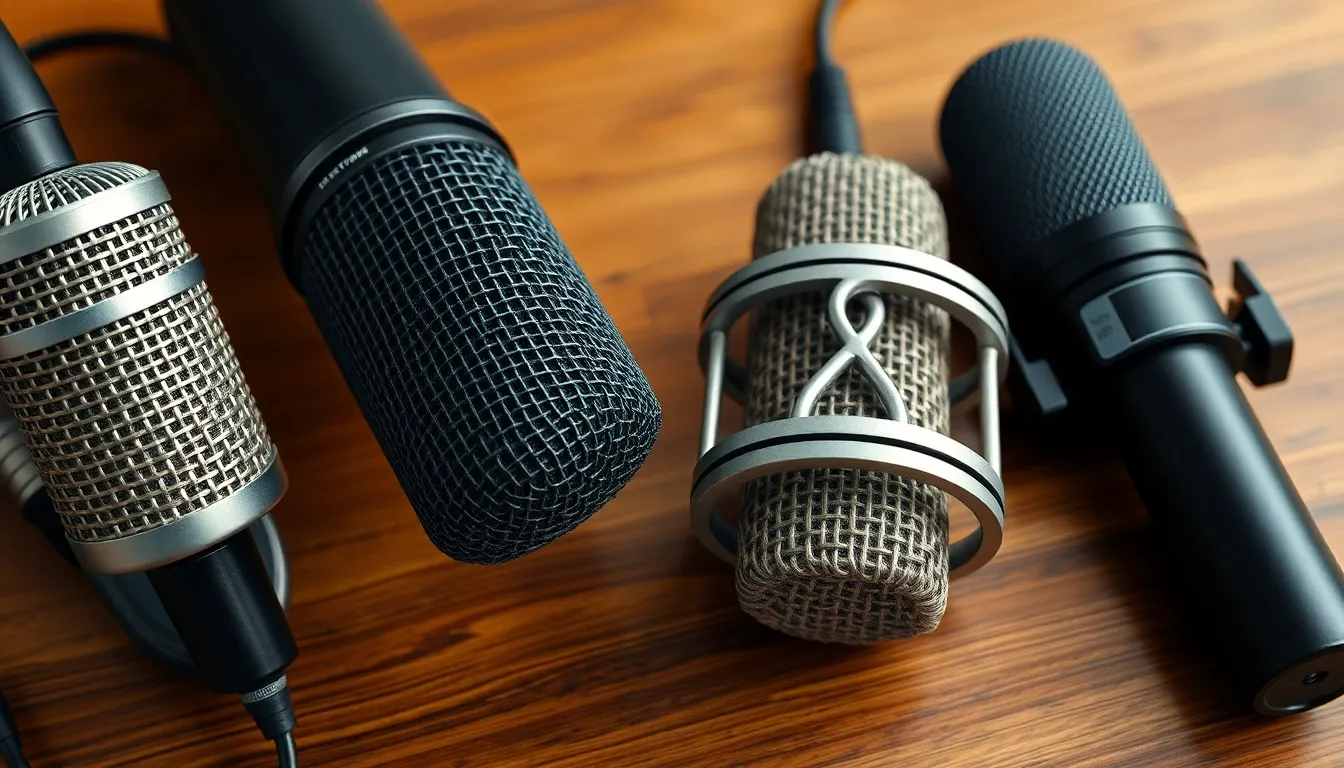
Polar patterns play a crucial role in determining how microphones capture sound from different directions. Here are some common types.
Cardioid
Cardioid microphones capture sound primarily from the front while minimizing noise from the sides and rear. They excel in live performances and studio recordings, providing an intimate sound by reducing ambient noise. This pattern resembles a heart shape, which makes it easier to visualize its directionality. Many vocalists and instrumentalists choose cardioid mics, as they reduce bleed from other instruments. These microphones are ideal for podcasting and broadcasting, ensuring the main sound source remains clear and present.
Omnidirectional
Omnidirectional microphones pick up sound equally from all directions, providing a natural listening experience. They work well in recording environments where capturing ambient sound is necessary, such as field recordings or interviews. Flexibility defines these microphones since they don’t prioritize sound from any specific direction. Omnidirectional mics often find use in conferencing systems, where participants might be spread across a room. Their design allows for capturing a more realistic soundscape, which enhances the overall audio quality of recordings.
Bidirectional
Bidirectional microphones, also known as figure-eight mics, capture sound from the front and rear while rejecting noise from the sides. This characteristic makes them particularly useful in duet performances or interview settings, allowing two sound sources to be captured simultaneously. Bidirectional patterns efficiently reduce ambient noise and feedback, providing a more focused audio experience. Engineers often utilize these mics in studio settings, where capturing multiple sound sources without interference is crucial. Their design is beneficial for recording various dialogues and conversations.
Shotgun
Shotgun microphones excel at isolating sound from a narrow direction while minimizing ambient noise. These highly directional mics are commonly used in film and television productions, where capturing dialogue from a distance is essential. A long, narrow pickup pattern allows them to focus on sound sources directly in front while rejecting off-axis noise. Sound engineers appreciate their versatility when needing to capture specific audio without interference from surrounding sounds. Shotgun mics also enhance location recording quality, making them a favorite for field recording applications.
Applications of Polar Patterns
Polar patterns play a crucial role in various audio applications, enhancing recording quality.
Studio Recording
In studio recording, cardioid microphones excel by capturing sound primarily from the front. These mics minimize ambient noise, which benefits vocalists and instrumentalists. Flexibility allows for precise placement, ensuring optimal sound capture without interference from unwanted sources. Additionally, utilizing omnidirectional mics in certain studio settings can create a more immersive sound. This technique captures room ambiance, contributing to a richer overall audio mix.
Live Sound
For live sound applications, cardioid mic patterns are particularly valuable. Their ability to reject noise from the sides helps focus on vocal performances, making them ideal for musicians and presenters. The reduced feedback enhances clarity, allowing listeners to enjoy the audio without distractions. In contrast, omnidirectional microphones can serve well in group performances, capturing the sound of multiple instruments. This versatility enriches the live experience, ensuring the audience hears a balanced mix.
Field Recording
Field recording often relies on shotgun microphones due to their highly directional capabilities. These mics effectively isolate sound from a narrow area, making them perfect for capturing dialogue in film and television. Increased rejection of ambient noise enhances audio clarity, even in challenging outdoor environments. On the other hand, omnidirectional microphones can be utilized to gather natural soundscapes. This approach creates realistic recordings, drawing listeners into the environment’s atmosphere.
Choosing the Right Polar Pattern
Selecting the appropriate polar pattern enhances audio capture quality. Different situations require different microphone sensitivities, making informed choices essential.
Factors to Consider
Environment significantly impacts microphone performance. In noisy settings, cardioid or shotgun microphones offer directionality, effectively reducing background sounds. Conversely, omnidirectional microphones capture ambient noise, adding depth to recordings in quiet spaces. Intended use is also critical. Live performances demand microphones that handle high sound pressure levels, while studio work may benefit from versatile omnidirectional options. Finally, microphone positioning affects polar pattern effectiveness. Proper alignment ensures optimal sound capture, particularly with unidirectional microphones focusing on a specific source.
Common Mistakes to Avoid
Overlooking the environment often leads to poor audio quality. A common error is using omnidirectional microphones in loud spaces, which can result in unwanted noise. Similarly, neglecting microphone placement reduces effectiveness; positioning a cardioid mic too far from the sound source diminishes clarity. Another frequent mistake involves assuming all microphones serve the same purpose. Each polar pattern excels in specific contexts, so understanding their differences is vital for achieving desired results. Finally, failing to consider post-production needs can complicate mixing. Choosing the right polar pattern from the beginning simplifies the audio editing process.
Mastering polar patterns is vital for anyone looking to elevate their audio projects. By understanding how different microphone types respond to sound from various directions, individuals can make informed decisions that enhance recording quality. Whether capturing vocals in a studio or ambient sounds in the field, selecting the right polar pattern ensures clarity and reduces unwanted noise.
This knowledge not only streamlines the recording process but also enriches the final audio product. With the right microphone in hand, achieving the desired sound becomes not just a possibility but a guarantee. Embracing the nuances of polar patterns ultimately transforms the way audio is captured and experienced.