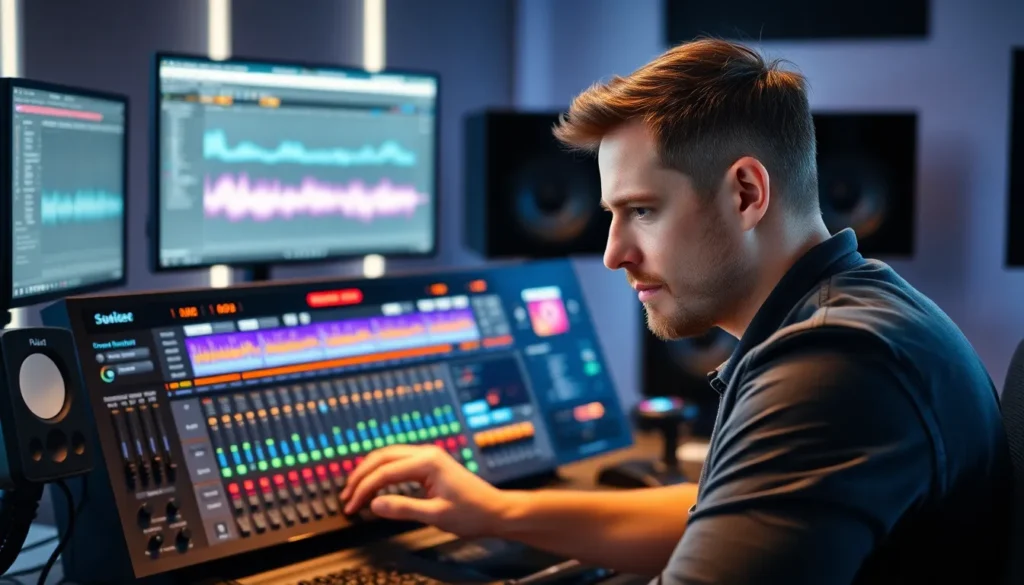
In a world where music is often consumed through tiny earbuds, stereo widening techniques are the secret sauce that can make tracks leap out of the speakers and dance around the room. Imagine your favorite song not just playing in your ears but wrapping around you like a warm hug from a long-lost friend. That’s the magic of stereo widening—it transforms flat sound into a lush, immersive experience that can make even the most mundane moments feel like a concert.
But wait, there’s more! Mastering these techniques isn’t just for the pros; anyone can sprinkle a little audio fairy dust on their mixes. From simple panning tricks to advanced processing, stereo widening can elevate a track from “meh” to “wow” faster than you can say “turn it up!” So, let’s dive into the world of stereo widening and discover how to make sound truly come alive.
Overview of Stereo Widening Techniques
Stereo widening techniques enhance audio by creating a broader soundstage. These methods enrich the listener’s experience, allowing for more engaging and immersive sound. Both simple and advanced techniques exist for achieving stereo widening, suited for various skill levels.
One common method involves panning elements in a mix. Panning instruments left or right helps create a sense of space. Wider panning can introduce depth and dimensionality, making individual sounds more distinct.
Additionally, the use of time-based effects can expand stereo images. Delays, particularly those with slightly different timings, generate a sense of width. Adjusting parameters like feedback and stereo width also broadens the audio landscape.
Modulation effects can further enhance stereo width. Chorus and flanger effects introduce subtle changes in pitch, which adds richness to sounds. These variations create a fuller audio experience without overcrowding the mix.
Using stereo enhancement plugins provides another effective option. Many digital audio workstations (DAWs) include built-in tools for widening tracks. These plugins analyze the audio signal and expand its stereo image carefully.
Incorporating bass management techniques ensures low-frequency sounds remain centered. Low-end elements, such as kick drums and bass guitars, should balance within the stereo field. This approach prevents a cluttered sound while maintaining the focus on higher frequencies.
Exploring mid-side processing allows for advanced control over mix elements. In this technique, the mid (center) and side (left-right) information is manipulated separately. This method allows sound engineers to widen elements without losing clarity.
Stereo widening techniques encompass a variety of strategies. Each method serves to create a more enjoyable listening experience, attracting both amateur and professional producers to explore the possibilities.
Common Stereo Widening Techniques

Various stereo widening techniques enhance audio and create a more expansive soundstage. These methods are accessible to anyone looking to elevate their music production.
Panning Techniques
Panning elements within a mix offers a straightforward approach to create stereo width. Placing instruments to the left or right adds depth, allowing for a clearer sonic perspective. It’s essential to distribute sounds evenly across the stereo field to avoid clutter. Utilizing extreme panning can emphasize specific elements, such as lead vocals or guitars. Subtle adjustments often yield pleasing results that help maintain balance.
Delay-Based Methods
Delay-based methods serve to widen audio by creating echoes that enhance spatial perception. Employing a short delay on one side of the stereo field allows for a thicker sound. A technique called ping-pong delay alternates sound decay between left and right channels, creating an immersive experience. Adjusting feedback levels and timing can personalize the effect further. Overall, these methods provide a dynamic quality that captures listener attention.
Equalization Techniques
Equalization techniques contribute to stereo widening by enhancing frequencies that project sound outward. Boosting higher frequencies on one side while cutting them slightly on the other results in more prominent separation. Additionally, using different EQ responses for left and right signals adds to the three-dimensional feel. Ensure low frequencies remain centered to maintain clarity and impact in the mix. Such strategic equalization fosters a rich auditory environment.
Advanced Stereo Widening Techniques
Advanced stereo widening techniques enhance soundscapes, enriching audio experiences. Two effective methods include mid-side processing and phase manipulation.
Mid-Side Processing
Mid-side processing separates audio into mid and side components, enhancing control over stereo image. This technique allows for individual adjustment of the center and the stereo sides. By boosting side signals, one can achieve a wider soundfield without affecting the mono content. Utilizing this method helps maintain clarity in the middle frequencies while expanding spatial perception in the mix. It’s often used in mastering to achieve a polished final product. Many plugins provide intuitive user interfaces for applying mid-side processing effectively.
Phase Manipulation
Phase manipulation modifies audio signals to create depth and width in a mix. This technique uses phase relationships to enhance or reduce specific frequencies. By adjusting phase shifts, audio engineers can alter the perception of sound placement in the stereo field. Implementing subtle offsets creates a sense of space, making elements feel more prominent or distant. Careful application of this method can prevent phase cancellation, which can result in a thinner sound. Overall, phase manipulation serves as a powerful tool for achieving stereo widening while keeping the mix balanced.
Applications of Stereo Widening Techniques
Stereo widening techniques find a variety of applications in music production, enhancing both recorded tracks and live performances. Creating an immersive sound experience plays a crucial role in both contexts. Many producers utilize stereo widening methods to bring life to individual elements within a mix, achieving a more dynamic listening environment.
Panning instruments across the stereo field stays a fundamental practice. This technique helps to clarify the arrangement by placing vocals in the center, while instruments such as guitars and keyboards blend seamlessly on either side. Applying time-based effects like delays also contributes significantly, generating a sense of depth using techniques like ping-pong delay.
Commercial music often employs stereo widening to achieve radio-ready sound. Enhanced spatial perception captivates listeners, showcasing the artist’s intention. Mixing engineers routinely enhance tracks with modulation effects, including chorus and flanger, adding richness and complexity to the overall sound.
In live performance settings, stereo widening proves essential for engaging audiences. Producers use stereo enhancement plugins to create impactful soundscapes, ensuring viewers feel enveloped by the music. Effective bass management remains vital, keeping low-frequency elements centered while allowing higher frequencies to spread.
Mastering music often incorporates mid-side processing. This technique allows engineers to adjust mid and side components independently, enhancing the stereo image without sacrificing mono compatibility. Optimizing phase relationships creates further depth and width, adding layers to the listening experience.
Tracks benefit from these stereo widening techniques, appealing to listeners and enhancing engagement. Each application contributes to clearer, richer audio, transforming how music is perceived and enjoyed.
Stereo widening techniques play a crucial role in enriching the audio experience. By employing methods like panning and delay, producers can create a captivating soundstage that draws listeners in. The accessibility of these techniques empowers both beginners and seasoned professionals to enhance their mixes effectively.
Utilizing plugins and advanced methods such as mid-side processing allows for tailored adjustments that elevate the overall sound without sacrificing quality. As the music landscape continues to evolve, mastering stereo widening will remain an essential skill for anyone looking to produce immersive and engaging audio. Embracing these techniques can transform music into a vibrant experience that resonates with audiences.