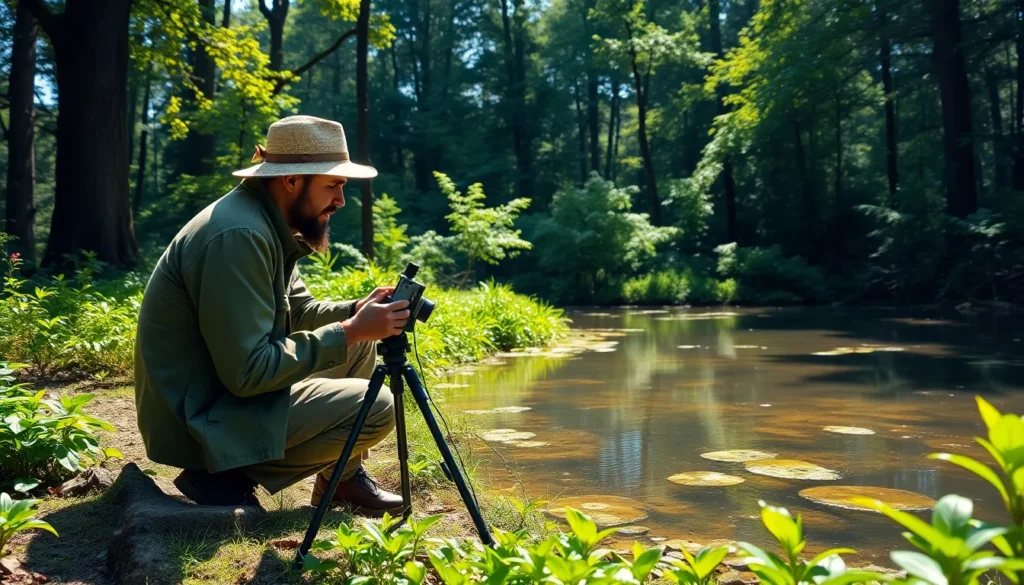
In a world where nature’s symphony plays on repeat, bioacoustic research tools are the unsung heroes of wildlife study. These nifty gadgets help scientists eavesdrop on the chatter of animals, revealing secrets hidden in their calls and songs. Imagine decoding the gossip of frogs or the serenades of birds—it’s like being a nature detective with a high-tech toolkit!
Overview of Bioacoustic Research Tools
Bioacoustic research tools play a vital role in wildlife studies by capturing sounds produced by animals in their natural habitats. These devices include audio recorders, specialized microphones, and software for sound analysis. Audio recorders, often waterproof and battery-operated, enable prolonged monitoring without human presence.
Specialized microphones enhance sound capture, filtering out unwanted noise while focusing on specific frequencies produced by animals. Researchers can use parabolic microphones for enhanced sensitivity when studying elusive species. These tools aid in identifying species presence and understanding their behaviors.
Software for sound analysis processes recorded data, allowing scientists to visualize sound patterns through spectrograms. Such analysis reveals communication methods among species, which can include mating calls, alerts to predators, or territory claims. By categorizing calls, researchers gain insights into population dynamics and stress responses in ecosystems.
The significance of bioacoustic tools extends to conservation efforts, as tracking vocalizations can inform habitat protection strategies. Analyzing trends in sound frequency and intensity over time provides valuable information on species health. In challenging environments, remote monitoring using networked sensors delivers real-time data, further enhancing the research scope.
Field studies incorporate these tools to minimize disturbance in wildlife habitats. The results contribute to scientific knowledge while fostering a deeper understanding of environmental interactions. Collaboration among researchers using shared data and technology strengthens bioacoustic research, allowing for large-scale studies across different ecosystems.
Types of Bioacoustic Research Tools
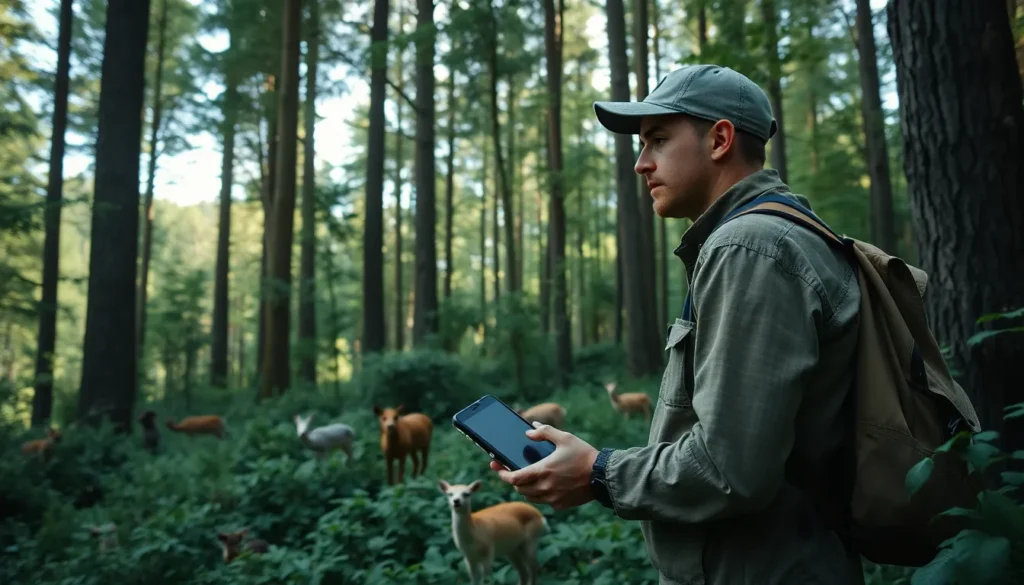
Bioacoustic research tools consist of various devices used for monitoring and analyzing animal sounds, each serving unique functions in wildlife studies.
Passive Acoustic Monitoring Devices
Passive acoustic monitoring devices capture sounds without interaction, allowing continuous observation of wildlife behavior. These tools record vocalizations in natural habitats, providing valuable insights into animal communication. Researchers prefer using these devices during breeding seasons or migration periods. Quality models utilize advanced microphones that capture a wide range of frequencies while minimizing background noise. Locations for device deployment vary from forests to wetlands, enhancing data collection across ecosystems. Data from these recordings help scientists determine population dynamics or detect rare species through their unique calls.
Active Acoustic Sampling Instruments
Active acoustic sampling instruments emit sound waves to gather information about wildlife. These devices typically include sonar systems and other ultrasonic technologies. Researchers operate these tools to detect animals and study their behavior in real time. By analyzing the reflected sound waves, they can assess fish populations in aquatic environments or monitor movement patterns in terrestrial species. Active systems prove beneficial for gathering data over larger areas compared to passive methods. Integrating real-time feedback enables scientists to adapt their strategies and improve data collection processes in dynamic ecosystems.
Applications of Bioacoustic Research Tools
Bioacoustic research tools serve several critical applications in various fields, particularly in wildlife conservation and marine biology studies.
Wildlife Conservation
Bioacoustic tools play a pivotal role in wildlife conservation by enabling the monitoring of species vocalizations. By capturing the sounds of endangered species, researchers can identify their habitats and understand their behaviors. Recording vocalizations during key periods, such as breeding seasons, provides insights into population dynamics and helps in assessing species health. Continuous monitoring using passive acoustic devices reduces human interference in natural habitats. This approach allows conservationists to develop effective protection strategies based on real-time data. As a result, bioacoustic research significantly contributes to informed conservation decisions.
Marine Biology Studies
In marine biology, bioacoustic research tools facilitate the study of underwater ecosystems. These tools enable the monitoring of marine species through their vocalizations. By employing specialized microphones and sonar systems, researchers can gather data on fish populations and track migratory behaviors. Analyzing aquatic soundscapes reveals insights into community structures and biodiversity. Continuous monitoring as marine habitats change enhances adaptive management strategies for conservation efforts. Furthermore, bioacoustic methods allow scientists to assess environmental impacts on marine life without invasive techniques. Thus, bioacoustic studies significantly advance understanding of oceanic ecosystems.
Advancements in Bioacoustic Technology
Recent innovations in bioacoustic technology continue to enhance wildlife research. The introduction of miniaturized audio recorders has enabled long-term studies in challenging environments. These devices can now capture sounds with exceptional clarity, facilitating more nuanced behavioral observations.
Improved machine learning algorithms for sound analysis significantly bolster data processing efficiency. Researchers can now quickly identify and classify thousands of vocalizations, yielding insights into complex communication patterns among species. Software developments allow for visual representation of acoustic data. These tools reveal intricate relationships between sound frequencies and animal behavior.
Advanced sensor networks create opportunities for remote monitoring. With multiple devices working in concert, researchers gain unprecedented access to real-time data on animal movements and populations. This collective approach enhances collaboration, merging findings from various ecosystems into a comprehensive understanding of global wildlife trends.
Active acoustic devices have evolved to include more sophisticated sonar systems. These technologies provide detailed assessments of fish populations and other aquatic species. Different frequency ranges enable targeted monitoring of specific groups, essential for conservation efforts in aquatic habitats.
Passive acoustic monitoring has also seen advancements, with devices capable of filtering out background noise far more effectively. Researchers can now focus on critical sounds necessary for tracking rare or endangered species in their natural settings. This focus leads to more accurate population estimates and informs habitat protection strategies.
Bioacoustic tools are instrumental in fostering sustainable practices. The ability to monitor species without intrusive methods minimizes human impact while maximizing data collection potential. These advancements underscore the vital role bioacoustic technology plays in understanding and preserving biodiversity.
Challenges in Bioacoustic Research
Bioacoustic research faces various challenges that can impact data collection and analysis. Ambient noise pollution significantly interferes with sound recordings, complicating species identification. Background sounds from industrial activities or urban environments mask critical animal vocalizations, leading to misinterpretations of data.
Equipment limitations present another hurdle. Some microphones may lack the sensitivity required to capture faint sounds, limiting effective monitoring in diverse habitats. Battery life concerns also arise, as prolonged recordings demand devices capable of enduring extended field deployments without frequent maintenance.
Data interpretation can prove complex. Accurately identifying species from recordings requires advanced analysis techniques and may involve substantial time investments. Misclassification of vocalizations can skew ecological assessments, complicating conservation strategies.
Integration of new technologies poses additional challenges. Adopting machine learning methods necessitates training algorithms with diverse datasets, creating a demand for tailored datasets that accurately represent local fauna. Researchers must also ensure compatibility between various systems for seamless data integration.
Fieldwork conditions may affect research effectiveness. Unpredictable weather impacts equipment performance and accessibility to study sites. Additionally, research permits and ethical considerations regarding wildlife interaction can delay project timelines.
Financial constraints often limit the scope of bioacoustic studies. Acquiring high-quality equipment and funding comprehensive field studies may prove difficult, particularly for smaller research teams. Competition for grants can further restrict resources available for bioacoustic projects.
Addressing these challenges requires collaboration across disciplines. Engaging with technology developers, ecologists, and conservationists can enhance research quality. Combining expertise fosters innovative solutions, ultimately advancing bioacoustic research and its applications in wildlife conservation.
Bioacoustic research tools are revolutionizing the way scientists study wildlife and their environments. By capturing and analyzing animal sounds, these tools provide invaluable insights into species behavior and communication. The advancements in technology enhance the accuracy and efficiency of data collection while minimizing human impact on natural habitats.
As researchers continue to tackle challenges like noise pollution and equipment limitations, collaboration across disciplines will be essential. The future of bioacoustic research holds great promise for conservation efforts and ecological understanding. With ongoing innovations, these tools will play a pivotal role in preserving biodiversity and fostering sustainable practices in wildlife management.