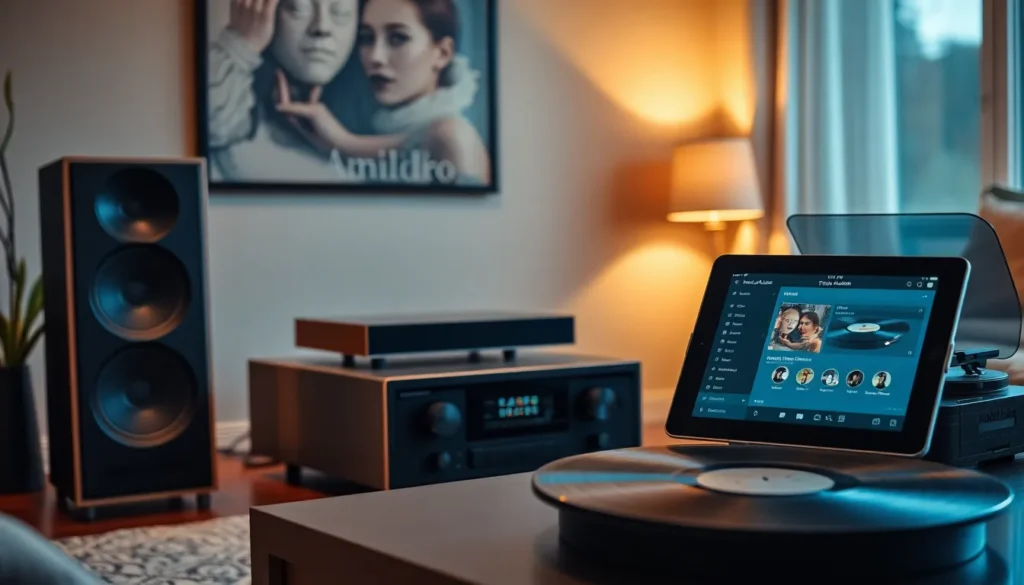
In a world where music lovers crave every note and nuance, lossless streaming audio has emerged as the superhero of sound. Forget about those pesky compressed files that leave your favorite tracks sounding like they’re trapped in a tin can. With lossless streaming, listeners can dive into a rich, immersive experience that captures every detail, making even the most mundane commute feel like a concert hall performance.
Imagine this: you’re jamming out to your favorite album, and instead of hearing a flat, lifeless rendition, you’re transported to the studio where the magic happened. It’s like having a front-row seat without the overpriced tickets and the guy who won’t stop singing off-key next to you. As streaming services evolve, lossless audio is becoming more accessible, turning casual listeners into audiophiles faster than you can say “bitrate.” Get ready to elevate your audio game and rediscover music in all its glory.
Overview of Lossless Streaming Audio
Lossless streaming audio delivers sound quality that matches the original recording. Unlike compressed files, which eliminate certain data for smaller sizes, lossless formats preserve every detail, offering clarity and richness. Streaming services, such as Tidal, Amazon Music HD, and Qobuz, now provide options for lossless audio, making it easier for music fans to access high-quality content.
Listeners experience music as intended by artists and producers. This level of fidelity enhances enjoyment and transforms familiar tracks into vivid audio experiences. For instance, instrument separation and nuanced vocal performances stand out, drawing attention to intricacies often lost in lower-quality formats.
Technological advancements support lossless streaming capabilities. High-speed internet connections enable the seamless delivery of large audio files, while modern audio equipment ensures playback fidelity. Many smartphones, portable music players, and dedicated audio systems now support lossless formats, making it convenient for users to enjoy premium sound quality on the go.
Consumer awareness is shifting towards high-resolution audio. With more individuals prioritizing sound quality, the demand for lossless streaming continues to grow. As this trend evolves, more services may adopt lossless options, further enriching the music experience for listeners globally.
Various file formats define lossless audio, including FLAC (Free Lossless Audio Codec) and ALAC (Apple Lossless Audio Codec). These formats compress audio data without sacrificing quality, allowing for efficient storage and streaming. A variety of content is available, ranging from classical compositions to contemporary hits, appealing to diverse musical tastes.
Overall, lossless streaming audio represents a significant leap in audio enjoyment. It offers an authentic listening experience that resonates with enthusiasts and casual listeners alike, fostering a deeper connection to the music.
Benefits of Lossless Streaming Audio
Lossless streaming audio offers numerous advantages for music lovers. These benefits significantly enhance how listeners engage with their favorite tracks.
Higher Sound Quality
Higher sound quality stands as a primary benefit of lossless streaming audio. Lossless formats, such as FLAC and ALAC, retain original recording details by compressing audio without losing quality. Many audiophiles appreciate this aspect, as it allows for a fuller range of frequencies, resulting in rich and nuanced sound. Additionally, this format captures subtle elements within recordings often lost in compressed audio. Streaming services like Tidal and Qobuz provide high-definition tracks, showcasing the true artistry behind the music. Enhanced clarity elevates the listening experience, transforming ordinary tracks into extraordinary performances.
Better Listening Experience
Better listening experiences emerge from lossless audio’s capacity to deliver sound as intended by artists. Music becomes more immersive, with listeners discovering layers within songs that enhance emotional connections. Higher bitrate and sample rates contribute to this richness, allowing for an engaging auditory journey. Many casual listeners, drawn to the clarity and depth, find that lossless audio transforms their enjoyment of music. It supports a deeper appreciation while providing a vibrant atmosphere reminiscent of live performances. Users increasingly recognize that choosing lossless streaming cultivates a remarkable listening journey.
Popular Lossless Streaming Audio Services
Several notable services offer lossless audio streaming, appealing to audiophiles and casual listeners. Each platform provides unique features and libraries that enhance the listening experience.
Tidal
Tidal excels in delivering high-fidelity audio, with lossless streaming options available through its HiFi plan. Subscribers gain access to over 80 million tracks in FLAC format, ensuring sound quality that mirrors studio recordings. Additionally, Tidal’s emphasis on exclusive content and artist collaborations creates a vibrant ecosystem. Curated playlists and personalized recommendations cater to diverse musical tastes. The service also supports MQA (Master Quality Authenticated) files, further enhancing audio fidelity. Overall, Tidal combines extensive libraries with exceptional audio quality, making it a top choice for discerning listeners.
Qobuz
Qobuz stands out for its focus on high-resolution audio, offering lossless streaming at up to 24-bit/192 kHz. More than 70 million tracks contribute to its extensive catalog, appealing especially to audiophiles. Qobuz provides detailed liner notes and editorial content that enrich the listening experience. Playlists are meticulously curated, reflecting a range of genres and themes. Users appreciate the platform’s user-friendly interface, simplifying music discovery and streaming. As a result, Qobuz continues to build a reputation as a premier service for those seeking unparalleled audio quality and rich musical insights.
Technical Aspects of Lossless Streaming
Lossless streaming audio hinges on two critical factors: bit rate and sample rate. Understanding these elements enhances the listening experience and preserves audio fidelity.
Bit Rate and Sample Rate Explained
Bit rate refers to the amount of data processed per second in an audio file. A higher bit rate typically results in better sound quality, as it allows for more audio information. Sample rate indicates how often audio is recorded in one second. Common sample rates include 44.1 kHz, used in CDs, and higher rates of 96 kHz and 192 kHz, enhancing audio detail. Lossless formats, such as FLAC, can support both high bit rates and sample rates, ensuring music lovers enjoy studio-quality sound. Listeners can experience a clear difference in clarity and depth when choosing higher values.
Compression Techniques Used
Lossless streaming employs various compression techniques, maintaining sound quality without sacrificing audio integrity. FLAC (Free Lossless Audio Codec) compresses audio files efficiently, preserving original recordings while reducing file sizes. ALAC (Apple Lossless Audio Codec) offers similar benefits exclusively to Apple devices, allowing flexibility across platforms. Both formats achieve compression by eliminating redundant data in a reversible manner, ensuring zero loss of quality. Unlike lossy formats, these methods guarantee that every detail remains intact. Music enthusiasts benefit from the storage efficiency alongside the superb listening experience provided by these technologies.
Comparison with Standard Streaming Audio
Lossless streaming audio provides a significant upgrade over standard streaming audio formats. Standard streaming uses compression techniques like MP3, which can strip away crucial details from music. Lossless formats, such as FLAC and ALAC, maintain audio fidelity, ensuring listeners experience the full richness of recordings.
Bit rate serves as a key differentiator between the two types of audio streams. Standard streaming typically ranges from 64 kbps to 320 kbps, while lossless streaming often exceeds 1,000 kbps. Higher bit rates in lossless streaming deliver clearer, more dynamic sound, capturing subtle elements that compressions often omit.
Sample rates play an important role as well. Most standard formats offer 44.1 kHz, adequate for casual listening, but lossless audio can support rates up to 24-bit/192 kHz. This capability allows for precision in reproducing original recordings, immersing listeners in an auditory experience that mirrors a live performance.
Listeners increasingly recognize the value of lossless audio. Audiophiles appreciate its enhanced quality, while casual users find that it transforms everyday music enjoyment. Subscription services like Tidal and Qobuz readily appeal to both groups, promoting lossless options alongside extensive libraries.
User experience matters greatly in choosing between standard and lossless streaming. Standard streaming often benefits from faster loading times but sacrifices sound quality, while lossless streaming focuses on audio fidelity, potentially requiring more bandwidth. Flac, for instance, compresses audio without loss, balancing quality with storage efficiency.
Lossless streaming audio stands as the superior choice for those who prioritize sound quality, offering a richer, more nuanced audio experience compared to standard streaming formats.
Lossless streaming audio represents a significant leap in how listeners experience music. With its ability to deliver pristine sound quality that mirrors the original recordings, it’s changing the landscape of music consumption. As more services embrace lossless options, both casual listeners and dedicated audiophiles can enjoy a richer auditory experience.
The demand for high-resolution audio continues to grow, pushing technology and streaming platforms to adapt. Formats like FLAC and ALAC ensure that every detail is preserved while optimizing storage and streaming efficiency. As users increasingly recognize the value of lossless audio, they’re not just listening to music; they’re engaging in a deeper emotional journey with each track. This evolution in audio streaming is set to redefine how music is appreciated and enjoyed for years to come.